
Blood Clot (DVT & PE) Treatment in Huntsville
Minimally invasive care for deep vein thrombosis, pulmonary embolism, and IVC filters.
Schedule a Consult


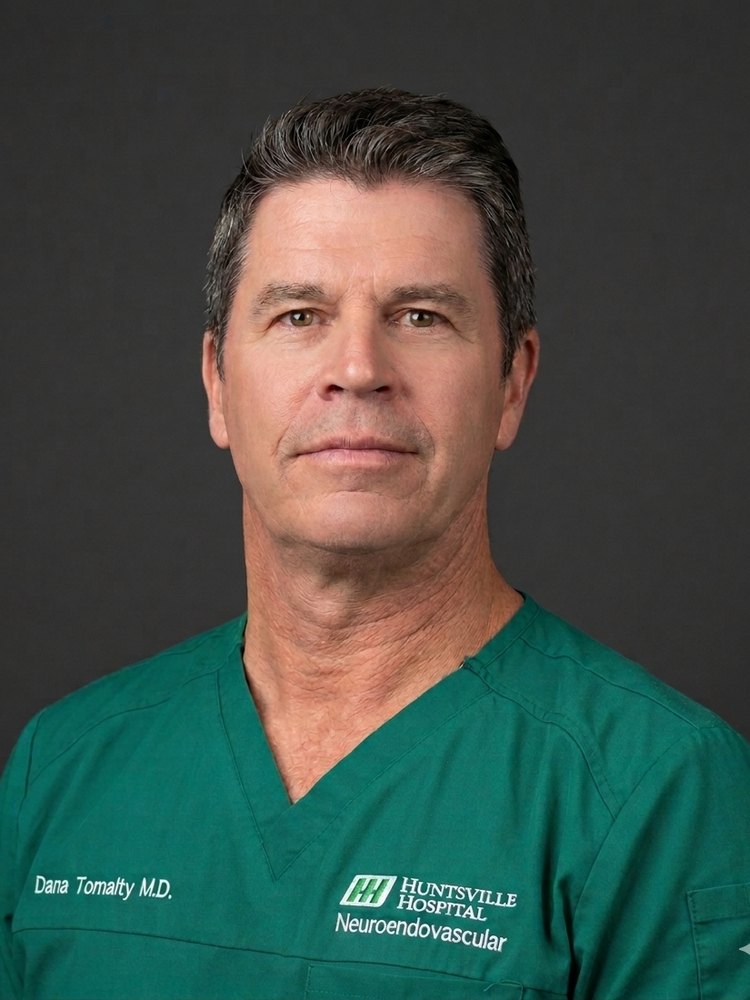
Medically reviewed by the physicians of Image Guided Intervention — Dr. Austin Bourgeois, Dr. David Kim, Dr. Ivan Morales, and Dr. Dana Tomalty, board-certified interventional radiologists in Huntsville, Alabama. Last reviewed: October 2026
Could This Be an Emergency?
Call 911 or go to the nearest emergency room now for sudden shortness of breath, chest pain, coughing up blood, or fainting. Do not drive yourself.
A painful, swollen leg without breathing symptoms should be checked the same day. See the full list of warning signs below.
Expert Care for Venous Blood Clots
Venous thromboembolism (VTE) includes deep vein thrombosis (DVT), a clot in a deep vein usually in the leg, and pulmonary embolism (PE), a clot that has traveled to the lungs. It affects hundreds of thousands of Americans each year.
Most clots are treated well with blood thinners. But some patients need more: a large clot causing severe leg swelling, a PE straining the heart, an IVC filter that should have come out years ago, or a leg that never fully recovered. That is where interventional radiology helps.
All of our board-certified interventional radiologists treat blood clots, and we work closely with emergency physicians, hospitalists, and primary care doctors across North Alabama and southern Tennessee.
How Blood Clots Are Treated
The right treatment depends on where the clot is, how large it is, your symptoms, and your bleeding risk.
Blood Thinners First
For most people with a DVT or PE, anticoagulant medication is the right first treatment. It stops the clot from growing and lets your body break it down over time.
Clot Removal for Selected DVT
For large clots in the thigh and pelvic veins with severe symptoms, catheter-based clot removal can relieve pain and swelling quickly and may reduce long-term leg damage.
Rapid Care for Pulmonary Embolism
For a PE that is straining the heart, catheter-based treatment can remove or dissolve clot in the lung arteries, guided by a team decision on who will benefit.
IVC Filters — In and Out
When blood thinners can't be used, a filter can protect the lungs. Once it is no longer needed, it should come out — even filters that have been in place for years.
Conditions We Treat
Select a condition to learn more — including an honest look at what the research shows.
Deep Vein Thrombosis (DVT)
A DVT is a clot in a deep vein, usually in the leg. Most DVTs are treated with blood thinners alone. Clot removal is worth discussing when the clot is large and extends into the thigh or pelvic veins (iliofemoral DVT), symptoms are severe, it was caught early, and your bleeding risk is low. It is urgent when a clot threatens the leg itself — a rare condition called phlegmasia.
- Mechanical thrombectomy — a catheter removes clot directly, often without clot-dissolving drugs.
- Catheter-directed thrombolysis — clot-dissolving medicine is delivered right into the clot through a catheter.
- Often combined in one session, through a small puncture behind the knee, in the groin, or in the neck.
Pulmonary Embolism (PE)
A PE is a clot that has traveled to the lungs. Most patients do well with blood thinners alone. When a PE is putting strain on the right side of the heart, or a patient is getting worse, catheter-based treatment can help clear the lung arteries faster. These decisions are best made by a pulmonary embolism response team (PERT) — specialists who review your case together, quickly.
- Catheter-directed thrombolysis — a low dose of clot-dissolving medicine delivered directly into the lung arteries.
- Mechanical thrombectomy — large catheters remove clot from the lung arteries, avoiding clot-dissolving drugs.
- Performed through a vein in the groin or neck, usually while you are in the hospital for the PE.
IVC Filter Placement and Removal
An inferior vena cava (IVC) filter is a small device placed in the large vein in your abdomen to catch clots before they reach the lungs. Filters are used when you can't take blood thinners. Most filters are designed to be removed once blood thinners can be started, and the FDA advises removal once the clot risk has passed.
- Many filters are never removed — national studies show only a minority come out on time.
- Filters left in for years can tilt, break, or press through the vein wall.
- Filters placed elsewhere, filters in place for many years, and filters where a previous removal attempt failed can often still be removed with advanced techniques.
Have a filter that has never been reviewed? Ask for a filter consultation. A CT scan shows how the filter is sitting and whether it can come out.
Post-Thrombotic Syndrome (PTS)
After a DVT, 20 to 50 percent of people develop post-thrombotic syndrome: leg swelling, heaviness, aching, skin changes, and in severe cases, ulcers. It usually shows up in the months after the clot. Many patients don't know it has a name — or that it can be evaluated.
- Compression stockings can ease symptoms, though a large trial found they don't prevent PTS.
- Exercise, leg elevation, and good skin care help.
- When swelling persists, imaging can check for a narrowed or blocked vein in the pelvis, which may be treatable.
If your leg is still swollen months after a clot, a consultation can tell you what is causing it and what can be done.
What to Expect
Select a step to learn more.
Consultation
Your interventional radiologist reviews your imaging, history, and medications, and talks through whether blood thinners alone are right for you or whether a procedure may help. If you have been referred by an emergency physician, hospitalist, vascular specialist, or primary care provider, we coordinate with them directly.
For urgent clots, evaluation often happens in the hospital the same day.
Procedure Day
For a planned procedure, have nothing to eat or drink after midnight the night before. Procedures are done under conscious sedation through a small puncture in a vein — behind the knee, in the groin, or in the neck — using real-time imaging. No incision and no stitches.
Filter removal usually takes under an hour. Clot removal can take one to three hours depending on the size of the clot.
Recovery and Follow-Up
Filter removals and many DVT procedures are outpatient. Patients treated for PE are usually already in the hospital and go home once stable. Someone must drive you home, and you should not drive for 24 hours.
Most people continue blood thinners afterward. Leg swelling and pain often improve within days of clot removal. Follow-up imaging and a clinic visit check how the veins have healed.
Life After a Blood Clot
Many patients are told that once they start blood thinners, they are treated — and then spend months dealing with pain, swelling, fatigue, or breathlessness no one prepared them for. Recovery is real, and it takes time.
- Leg swelling and aching often improve over weeks to months. If they don't, it may be post-thrombotic syndrome, which can be evaluated.
- Breathlessness after a PE usually improves over weeks. If it lasts beyond about three months, ask about testing for chronic clot in the lungs.
- Activity: walking and light activity are generally encouraged early. Ask your physician when to return to strenuous exercise.
- Worry about another clot is common and normal. Talk with your doctor about how long to stay on blood thinners and what raises your risk.
When to Call 911 — and When to Call Us
Call 911 or go to the ER now
- Sudden shortness of breath, or breathing that is suddenly much worse
- Chest pain, especially with a deep breath or cough
- Coughing up blood
- Fainting, nearly fainting, or a very fast or irregular heartbeat
- A leg that suddenly becomes very swollen, pale, blue, or cold, or severe pain with numbness
- On a blood thinner: vomiting blood, black or bloody stools, bleeding that won't stop, a hit to the head, or a sudden severe headache, confusion, or weakness
Call our clinic (same or next day)
- New or increasing leg swelling, pain, warmth, or redness without breathing symptoms
- Mild bruising or oozing at a procedure site that stops with pressure
- Leg heaviness, skin changes, or a sore that won't heal
- Questions about blood thinners before another procedure
- An IVC filter that has never been reviewed for removal
- Breathlessness that lasts more than three months after a PE
Clinic: 256-265-8333
Frequently Asked Questions
Quick answers about blood clots, clot removal, and IVC filters.
Is a blood clot an emergency?
A clot in the lungs (pulmonary embolism) can be. Call 911 for sudden shortness of breath, chest pain, coughing up blood, or fainting. A suspected leg clot (DVT) with swelling and pain but no breathing symptoms should be evaluated the same day by your doctor, an urgent care, or the emergency department.
Do I need a specialist for a DVT or PE?
Most clots are managed with blood thinners by your primary care doctor or the hospital team. An interventional radiologist becomes involved when a procedure may help — a large or severe clot, a PE straining the heart, an IVC filter that needs to come out, or leg symptoms that won't go away.
Can my clot be removed?
Sometimes. Clot removal is most helpful for large clots in the thigh and pelvic veins that are causing severe symptoms, especially when treated early. For many smaller clots, blood thinners alone are the better choice. A consultation can tell you which applies to you.
Will removing the clot prevent post-thrombotic syndrome?
Not reliably. Large trials found routine catheter treatment did not lower the overall chance of post-thrombotic syndrome, but it did reduce how severe symptoms became, especially for large clots high in the leg. That is why we select patients carefully.
What does a pulmonary embolism response team (PERT) do?
A PERT is a group of specialists who review serious PE cases together, quickly, to decide whether blood thinners alone are enough or whether a catheter procedure or other treatment is needed. National guidelines now recommend this team approach for higher-risk PE.
My IVC filter has been in for years. Can it still come out?
Often, yes. Filters that have been in place for many years — and filters where a previous removal attempt failed — can frequently be removed with advanced techniques. A CT scan shows how the filter is sitting and helps plan removal.
Why is my leg still swollen months after a DVT?
Ongoing swelling, heaviness, and aching after a DVT may be post-thrombotic syndrome. Compression and exercise help symptoms, and imaging can check for a narrowed vein in the pelvis that may be treatable.
Why am I still short of breath after a PE?
Some breathlessness for weeks after a PE is common. If it lasts beyond about three months, ask to be evaluated for chronic clot in the lung arteries, which has specific treatments.
When can I exercise after a blood clot?
Walking and light activity are generally encouraged early once you are on blood thinners. Ask your physician when to return to strenuous exercise, which depends on the clot, any procedure you had, and how you are feeling.
Do I need a referral?
No. Self-referrals are welcome. Physicians can also refer patients directly to our clinic.
Have more questions? Our physicians are happy to discuss your specific situation.
Schedule Your ConsultationBlood Clot Treatment Physicians in Huntsville
Blood clot procedures are performed by our board-certified interventional radiologists. Call the clinic and you'll be scheduled with the first available specialist.
Talk With Our Team
Self-referrals are welcome. Physicians can refer patients for clot removal, PE consultation, or IVC filter review by calling the clinic.
Schedule a Consultation