
Varicocele Embolization
Dr. Austin Bourgeois offers minimally invasive treatment for varicoceles with 1-2 day recovery
Home » Varicocele Embolization
A Non-Surgical Solution for Varicoceles
If you’re experiencing scrotal discomfort, fertility concerns, or have been diagnosed with a varicocele, there’s a minimally invasive treatment option that doesn’t require surgery, general anesthesia, or weeks of recovery. Varicocele embolization is a proven procedure that treats enlarged veins in the scrotum through a tiny needle puncture—no incision, no stitches, and most patients return to work in just 1-2 days.
Dr. Austin Bourgeois offers varicocele embolization in Huntsville, providing men in North Alabama with a faster, safer alternative to surgical varicocelectomy. With a 90-97% success rate and significantly fewer complications than traditional surgery, embolization delivers the same long-term results with minimal downtime.
What Is Varicocele Embolization?
Varicocele embolization is an outpatient procedure that treats enlarged veins in the scrotum (varicoceles) from the inside, without surgery. Using real-time X-ray imaging, an interventional radiologist guides a thin catheter through a small needle puncture in the groin or neck to reach the abnormal testicular veins. Tiny coils or a medical-grade liquid agent are then deployed to block these veins, redirecting blood flow and eliminating the varicocele.
The entire procedure takes about 45-60 minutes under conscious sedation—no general anesthesia required. Over 90% of patients experience symptom improvement, and studies show 70-83% of men see improved semen parameters within 3-6 months. For couples trying to conceive, pregnancy rates after embolization range from 30-51%.
Benefits of Varicocele Embolization
- No surgical incision—just a tiny needle puncture
- No general anesthesia required
- Same-day discharge, no overnight stay
- Return to work in 1-2 days vs. 1-3 weeks for surgery
- Zero risk of hydrocele (vs. up to 8% with surgery)
- Both sides can be treated in one session through a single access point
- Equivalent success rates to surgery with fewer complications
Recovery & Results
Most patients go home the same day with mild discomfort managed by over-the-counter ibuprofen. You can return to desk work within 1-2 days and resume full physical activity within 4-5 days. Sexual activity can be resumed in 1-2 weeks.
For fertility patients, sperm improvements typically appear at 3-6 months, as it takes approximately 72 days for a complete cycle of sperm production. Studies show significant improvements in sperm count, motility, and morphology, with approximately 50% of couples achieving pregnancy within one year of treatment when no female factors are present.
Who is a Candidate?
Scrotal Pain or Discomfort
You experience a dull ache, heaviness, or dragging sensation in the scrotum that worsens with prolonged standing, exercise, or at the end of the day. The discomfort improves when you lie down. These symptoms have persisted for months and interfere with work, exercise, or daily activities.
Fertility Concerns
You and your partner have been trying to conceive, and a semen analysis shows low sperm count, poor motility, or abnormal morphology. Varicoceles are the most common correctable cause of male infertility, affecting 35 to 40 percent of infertile men. Studies show 70 to 83 percent of men see improved semen parameters within 3 to 6 months after embolization.
Want to Avoid Surgery
You prefer a treatment that requires no surgical incision, no general anesthesia, and no weeks-long recovery. Varicocele embolization gets you back to work in 1 to 2 days and full activity in under a week — compared to 1 to 3 weeks for surgical varicocelectomy.
Recurrent or Bilateral Varicoceles
Your varicocele has returned after a previous surgical repair, or you have varicoceles on both sides. Embolization is especially effective for post-surgical recurrence — with 100 percent retreatment success in a 15-year study — and can treat both sides through a single needle puncture in one session.
What to Expect During Varicocele Embolization
Consultation and Treatment Planning
You’ll have a brief consultation with Dr. Bourgeois to review your medical history, imaging results, and discuss the procedure. No special preparation is needed beyond fasting for 6 hours before the appointment.
Procedure Day
After receiving local anesthesia and IV conscious sedation, a small needle is inserted into a vein in your groin or neck. A thin catheter is guided to the testicular veins using real-time X-ray imaging. Once the abnormal veins are identified through a diagnostic venogram, tiny metal coils or a liquid sclerosant are deployed to block the veins. A final venogram confirms complete occlusion. The entire process takes 45-60 minutes.
Recovery and Discharge
You’ll rest in a recovery area for about one hour before going home the same day. A small bandage covers the needle puncture site—no stitches needed. Most patients experience mild aching for 2-5 days, easily managed with ibuprofen. You should avoid heavy lifting (>10 pounds) and vigorous exercise for 3-7 days.
How Varicocele Embolization Compares to Surgery
Side-by-side comparison of your treatment options for varicoceles.
| Feature | Embolization ✦ | Microsurgical Varicocelectomy | Open Surgery |
|---|---|---|---|
| Anesthesia | Local + sedation | General/regional | General |
| Incision | None (needle puncture) | 2.5 cm | 3–5 cm |
| Return to work | 1–2 days | 7–14 days | 14–21 days |
| Success rate | 90–97% | >98% | 95–97% |
| Recurrence rate | 4–9% | 1–2% | 5–15% |
| Hydrocele risk | 0% | 0.5% | Up to 8% |
| Bilateral treatment | Single session, one access | Yes, but longer | Two separate incisions |
| Hospital stay | Same-day discharge | Same-day discharge | Same-day to overnight |
✦ Dr. Bourgeois performs varicocele embolization in Huntsville — the only local provider of this procedure.
Why Choose North Alabama’s Varicocele Embolization Specialist?
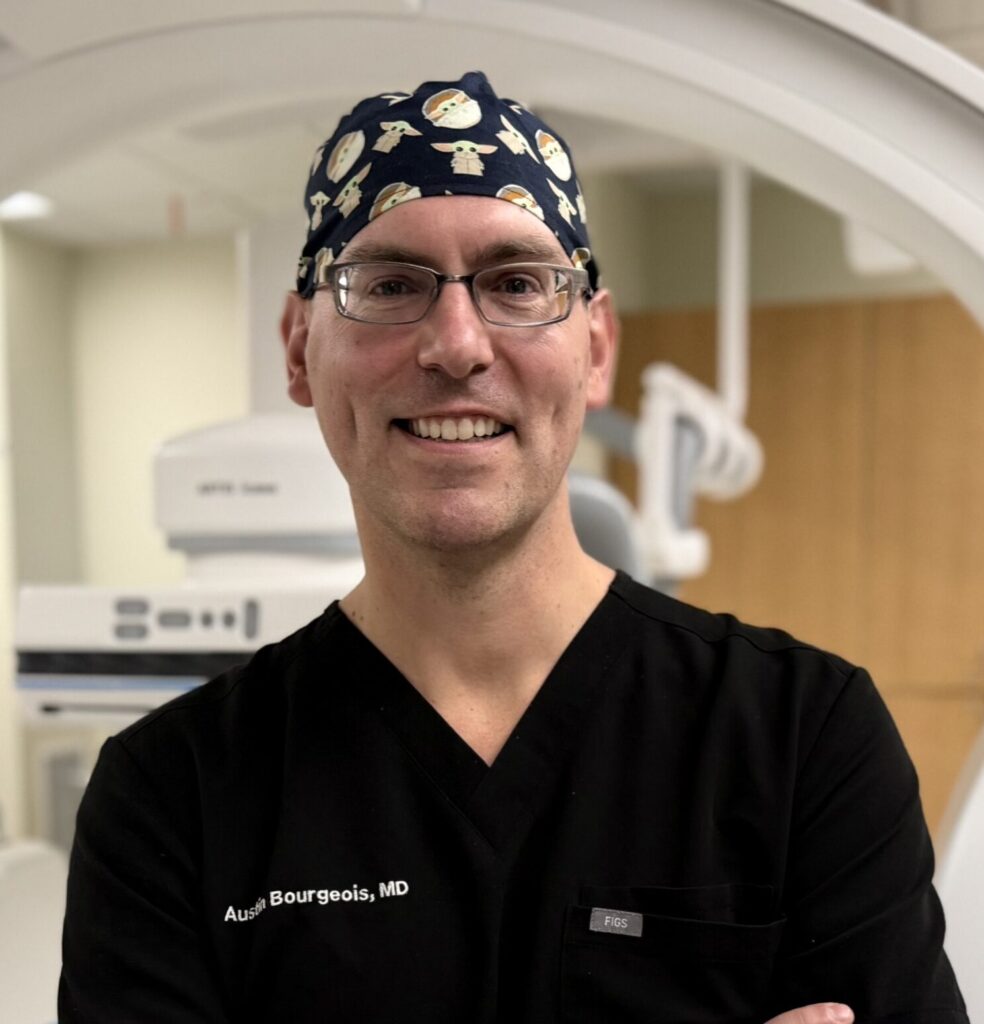
Dr. Austin Bourgeois is a board-certified interventional radiologist with specialized training in minimally invasive vascular procedures. He brings advanced expertise in image-guided therapy to provide North Alabama’s only local varicocele embolization service.
Prior to Dr. Bourgeois offering this procedure in Huntsville, men in North Alabama had to travel over 100 miles to Nashville, Birmingham, or beyond for varicocele embolization. Now, you can receive this advanced treatment close to home with a physician who understands the unique needs of our military, aerospace, and technology workforce—where rapid return to full activity isn’t just preferred, it’s often mission-critical.
Frequently Asked Questions
Quick answers about varicocele embolization — procedure, recovery, and fertility outcomes.
Varicocele embolization is a minimally invasive, non-surgical procedure that treats enlarged veins in the scrotum (varicoceles) by blocking them from the inside. An interventional radiologist guides a thin catheter through a tiny needle puncture to the affected veins and seals them using small coils or a liquid agent—no incision, no stitches, and no general anesthesia required. The entire procedure takes about 45-60 minutes, and you go home the same day.
Most patients return to desk work within 1-2 days and resume full physical activity within 4-5 days. Compare that to surgical varicocelectomy, which typically requires 1-3 weeks of recovery. You can resume sexual activity in 1-2 weeks (vs. 4 weeks after surgery). Post-procedure discomfort is mild—most patients manage it with over-the-counter ibuprofen for a few days.
Varicocele embolization has a 90-97% technical success rate for left-sided varicoceles, with long-term clinical improvement in over 90% of patients. A large meta-analysis found no significant difference in pregnancy rates or fertility outcomes compared to surgical repair, but embolization had significantly fewer complications. Recurrence rates range from 4-9%, comparable to many surgical techniques.
Studies show that 70-83% of men experience improved semen parameters after embolization, including increases in sperm count, motility, and morphology. Pregnancy rates after treatment range from 30-51% depending on the study, with approximately 50% of couples conceiving within one year when no female factors are present. Sperm improvements typically appear 3-6 months after the procedure, as it takes about 72 days for new sperm to develop.
Both achieve similar success rates and fertility outcomes, but embolization offers faster recovery (1-2 days vs. 1-3 weeks), no general anesthesia, no surgical incision, zero risk of hydrocele, and the ability to treat both sides through a single tiny puncture. A 2022 meta-analysis of 2,138 patients found embolization had significantly fewer adverse events than surgery. Many patients who have experienced both procedures report strongly preferring embolization due to the minimal recovery time.
Yes—varicocele embolization is typically covered by most insurance plans, including TRICARE, Blue Cross Blue Shield, Aetna, Cigna, and UnitedHealthcare, when medically indicated for symptoms like pain, infertility, or testicular atrophy. The procedure is billed under CPT code 37241, which explicitly includes varicoceles. Our team will verify your coverage and benefits before scheduling your procedure.
You may be a candidate if you have a diagnosed varicocele causing scrotal pain or discomfort, abnormal semen parameters or difficulty conceiving, testicular atrophy (shrinkage), or if you've had a varicocele recur after surgery. Embolization is especially well-suited for men who want the fastest recovery, prefer to avoid general anesthesia, need both sides treated in one session, or are active-duty military personnel who require minimal time away from duty. A consultation with Dr. Bourgeois can determine if embolization is right for you.
Have more questions? Dr. Bourgeois is happy to discuss your specific situation.
Schedule Your Consultation