
Home » Y90 Radioembolization
Precision Cancer Treatment — Without Traditional Surgery
When liver cancer or liver tumors limit your treatment options, Y90 radioembolization offers a powerful alternative to traditional surgery. This advanced procedure delivers millions of tiny radioactive microspheres directly into liver tumors through a small catheter — destroying cancer cells from the inside while leaving surrounding healthy tissue largely unaffected.
Unlike systemic chemotherapy that circulates throughout your entire body, Y90 targets tumors with pinpoint accuracy. The radiation travels less than 3 millimeters in tissue, concentrating its cancer-fighting energy exactly where it’s needed most. Most patients return home the same day and resume normal activities within one to two weeks.
Dr. Austin Bourgeois is one of the region’s most experienced Y90 providers, having published extensive research on optimizing radioembolization outcomes. His expertise in personalized dosimetry — tailoring the radiation dose to each patient’s specific tumor characteristics — reflects the latest advances in liver-directed therapy. Previously, patients in North Alabama traveled hours for this treatment. Now, expert Y90 care is available right here in Huntsville.
Liver Conditions We Treat with Y90
Hepatocellular Carcinoma (HCC)
The most common primary liver cancer. Y90 achieves tumor response rates above 88% in eligible patients and can serve as a bridge to liver transplant or as standalone treatment when surgery is not an option.
Colorectal Cancer Liver Metastases
When colon or rectal cancer spreads to the liver and resection is not feasible, Y90 combined with chemotherapy significantly improves tumor response and slows disease progression compared to chemotherapy alone.
Intrahepatic Cholangiocarcinoma
For bile duct cancers originating within the liver, Y90 achieves disease control in over 80% of patients. Treatment-naïve patients may see particularly strong outcomes with early intervention.
Neuroendocrine Tumor Liver Metastases
Carcinoid tumors, pancreatic neuroendocrine tumors, and other NETs that have spread to the liver respond well to Y90, with disease control rates around 86% and meaningful symptom relief for conditions like carcinoid syndrome.
Portal Vein Thrombosis Cases
Unlike conventional chemoembolization (TACE), Y90 can be safely performed in patients with portal vein tumor invasion — a critical advantage for patients who have been told other liver-directed treatments are too risky.
Bridge to Transplant or Surgery
Y90 can shrink tumors enough to qualify patients for liver transplant or surgical resection who were previously ineligible, opening doors to potentially curative treatments.
How Y90 Radioembolization Works
Y90 radioembolization — also known as selective internal radiation therapy (SIRT) or transarterial radioembolization (TARE) — is a minimally invasive procedure that delivers high-dose radiation directly to liver tumors through the blood supply.
The treatment takes advantage of a unique feature of liver anatomy: healthy liver tissue receives most of its blood from the portal vein, while liver tumors are fed almost exclusively by the hepatic artery. By injecting millions of microscopic glass or resin beads containing radioactive Yttrium-90 through the hepatic artery, the microspheres become permanently lodged in the tiny blood vessels feeding the tumor. Each bead is smaller than the width of a human hair.
Once in position, the Y90 microspheres emit targeted beta radiation that penetrates only about 2.5 millimeters into surrounding tissue — roughly the thickness of two stacked pennies. This concentrated radiation dose destroys tumor cells while the limited penetration depth protects nearby healthy liver tissue. The microspheres deliver 94% of their radiation within the first 11 days and become completely inert within approximately 30 days, decaying into harmless, stable material that remains safely in the liver permanently.
The result is a treatment that delivers radiation doses to tumors far higher than what external beam radiation can safely achieve — all through a procedure that typically takes about 90 minutes and allows patients to go home the same day.
Who is a Candidate?
Is Y90 Radioembolization Right for You?"
Generally speaking ideal candidates typically have adequate liver function (Child-Pugh class A or early B), reasonable overall health and activity level, and sufficient healthy liver volume to tolerate treatment. During your consultation, Dr. Bourgeois will review your imaging, lab work, and medical history to determine whether Y90 is the right approach for your specific situation. A planning angiogram and nuclear medicine scan performed prior to treatment confirm that microspheres can be safely delivered to your tumor.
Liver Tumors Not Suitable for Surgery
Patients diagnosed with liver cancer or liver metastases where surgical removal is not possible due to tumor size, location, number of tumors, or underlying liver condition. Y90 provides a powerful treatment option when surgery is off the table.
Seeking an Alternative to Repeated Chemoembolization
If you have undergone multiple TACE (chemoembolization) sessions or your tumors have stopped responding to conventional embolization, Y90 radioembolization offers a different mechanism of action with often superior tumor control and fewer required treatment sessions.
Portal Vein Involvement
Patients with tumor invasion of the portal vein are frequently told that chemoembolization is too dangerous. Y90 can be safely administered in these cases — an important distinction that expands treatment options for patients with more advanced disease.
Working Toward Transplant or Resection
For patients whose tumors currently exceed transplant criteria or surgical candidacy thresholds, Y90 can downstage disease — shrinking tumors enough to qualify for potentially curative liver transplant or surgical resection. Studies show downstaging success rates of 42-80%.
What to Expect: Your Y90 Treatment Journey
Consultation and Treatment Planning
Dr. Bourgeois reviews your diagnosis, imaging studies, and lab work in detail. He explains how Y90 works, discusses whether it fits your treatment plan, and answers your questions. If you are referred by an oncologist or surgeon, he coordinates with your existing care team to ensure a unified approach.
Mapping Angiogram and Planning Scan (Visit 1)
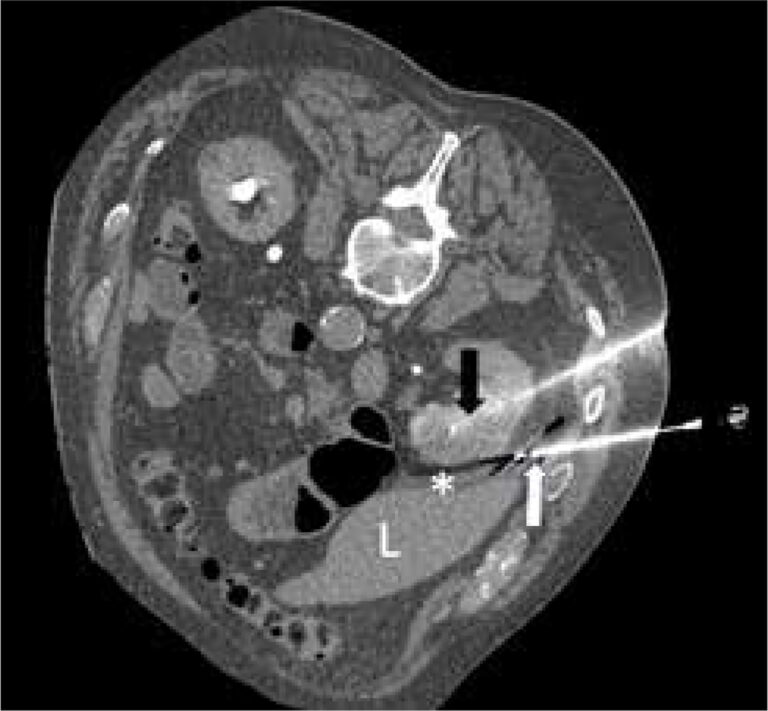
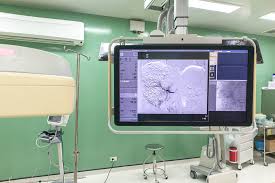
One to two weeks before your treatment, you undergo a planning procedure. A thin catheter is guided through a small access point in your wrist or groin to the arteries supplying your liver. Contrast dye maps the blood vessel anatomy, and tiny test particles are injected to simulate how the Y90 microspheres will distribute. A nuclear medicine scan confirms the particles reach the tumor and measures what percentage might travel to the lungs. This critical safety step allows Dr. Bourgeois to calculate your personalized radiation dose. The mapping procedure takes approximately two to four hours, is performed under moderate sedation, and you go home the same day.
Y90 Treatment Day (Visit 2)
Using the roadmap created during your planning session, Dr. Bourgeois positions the catheter at the precise location verified during mapping and delivers the Y90 microspheres. The beads flow with your blood directly into the tumor vasculature, where they lodge permanently and begin emitting targeted radiation immediately. A confirmatory scan may be performed to verify accurate delivery. The treatment itself takes about 60 to 90 minutes, and total time at the facility is typically four to six hours including preparation and observation. Most patients go home the same day.
Recovery and Follow-Up
The most common experience after Y90 is fatigue, which typically peaks during the first one to two weeks and gradually improves. Some patients experience mild abdominal discomfort, nausea, or low-grade fever — collectively known as post-radioembolization syndrome — which generally resolves within the first week or two. Most patients return to normal daily activities within one to two weeks. Your first follow-up imaging scan occurs approximately six to eight weeks after treatment to assess tumor response, followed by regular monitoring every three months.
Important Note: If tumors are present in both sides of the liver, treatment is typically performed in two sessions spaced four to six weeks apart — one session per lobe — to protect liver function between treatments.
Why Patients Choose Y90





Y90 Radioembolization vs. Other Liver Cancer Treatments
Choosing the right treatment depends on your specific diagnosis, tumor characteristics, liver function, and overall health. Here is how Y90 radioembolization compares to other common approaches for liver tumors:
Y90 vs. Chemoembolization (TACE)
Chemoembolization delivers chemotherapy drugs directly to liver tumors combined with an embolic agent that blocks blood flow. Both Y90 and TACE are catheter-based, liver-directed treatments, but they work through different mechanisms.
- Y90 demonstrated significantly longer time to tumor progression in head-to-head randomized trials — more than 26 months compared to approximately 6 months with TACE in one study.
- Y90 achieves three times the rate of complete tumor destruction on pathology compared to TACE.
- Y90 typically requires one to two sessions versus multiple repeated TACE procedures.
- Y90 can safely treat patients with portal vein tumor invasion, where TACE is often contraindicated.
- Total cost of care with Y90 may actually be lower than TACE when accounting for fewer treatment sessions.
Y90 vs. Systemic Drug Therapy
Systemic treatments including targeted therapies and immunotherapies circulate throughout the entire body. Y90 delivers treatment directly to liver tumors.
- Y90 produces comparable survival outcomes to first-generation systemic drugs with significantly fewer severe adverse events.
- Patients treated with Y90 consistently report better quality of life during treatment.
- Y90 and immunotherapy are increasingly used together, with early studies showing the combination produces strong tumor responses — the radiation may enhance the immune system’s ability to attack cancer cells.
Y90 vs. Surgical Resection
Surgery remains the gold standard for liver cancer when tumors can be safely removed. Y90 serves a complementary role:
- Y90 is the treatment of choice when tumors cannot be surgically removed due to size, number, location, or insufficient remaining liver volume.
- Y90 can shrink tumors to make previously inoperable patients surgical candidates.
- Radiation segmentectomy — treating a single liver segment with high-dose Y90 — is showing outcomes comparable to surgical removal for small, early-stage tumors.
- Y90 simultaneously treats tumor and stimulates growth of the healthy side of the liver, potentially enabling future surgery.
Is Y90 Safe for the People Around Me?"
One of the most common concerns patients have is whether they will be radioactive after treatment and whether their family is at risk. The answer is reassuring.
Y90 emits a type of radiation called beta particles that travel only about 2.5 millimeters in tissue — not even enough to penetrate the skin. This means virtually no radiation escapes your body. At a distance of three feet, the external radiation from a Y90 patient is comparable to normal background radiation you encounter every day.
Your family members’ total radiation exposure from being near you after treatment is estimated at approximately 0.04 millisieverts — roughly equivalent to a few hours of natural background radiation or a fraction of a single dental X-ray. The FDA does not require any patient isolation or supplemental shielding after Y90 treatment.
As a practical precaution, we recommend simple steps for approximately seven days after treatment: practice good hand hygiene, avoid prolonged close contact with young children or pregnant women, and use common-sense bathroom hygiene. By 11 days after treatment, more than 94% of the radiation has been delivered and activity levels are negligible. Within 30 days, the microspheres are completely inert.
This is dramatically less restrictive than many other radiation treatments. Patients receiving radioactive iodine therapy for thyroid conditions, for example, may need days of isolation. Y90 patients go home the same day and resume family life almost immediately.
Your Recovery Timeline After Y90
We believe in preparing our patients honestly. While Y90 is well-tolerated compared to many cancer treatments, recovery varies from person to person. Here is what most patients experience:
A note on honesty: Some patients experience fatigue lasting several weeks longer than the typical timeline above. We share this not to cause concern but because we believe informed patients recover better than surprised ones. Dr. Bourgeois and his team are available throughout your recovery to address any questions or symptoms that arise.
Understanding the Investment in Your Treatment
We understand that cost is a real concern when facing a cancer diagnosis, and we believe in transparency.
Y90 radioembolization is a specialized procedure, and total costs — including the microspheres, imaging, facility fees, and physician services — typically range from $25,000 to $42,000. The Y90 microspheres themselves account for a significant portion of this cost.
The good news: most major insurance plans cover Y90 radioembolization when medically indicated, including Blue Cross Blue Shield of Alabama, Medicare, Medicaid, TRICARE, UnitedHealthcare, Aetna, and Cigna. Prior authorization is typically required, and our team handles this process on your behalf.
An important consideration many patients overlook: while a single Y90 session may appear more expensive than a single chemoembolization session, Y90 typically requires just one or two treatments compared to multiple TACE sessions. When total cost of care is compared, studies have found Y90 may actually be more cost-effective overall.
Veterans receiving care through the VA system may be eligible for community care authorization to receive Y90 locally rather than traveling to the Birmingham VA Medical Center. Our office can assist with the referral and authorization process.
Before your procedure, our team will verify your insurance coverage, obtain necessary authorizations, and provide you with a clear estimate of any out-of-pocket costs so there are no surprises.

Expert Liver Cancer Treatment — Close to Home
Until now, patients in North Alabama needing Y90 radioembolization faced a difficult reality: hours of driving to Birmingham, Nashville, or Chattanooga for every appointment. For a treatment that typically requires four to six visits, that adds up to a significant burden — especially for patients already dealing with the fatigue and stress of a cancer diagnosis.
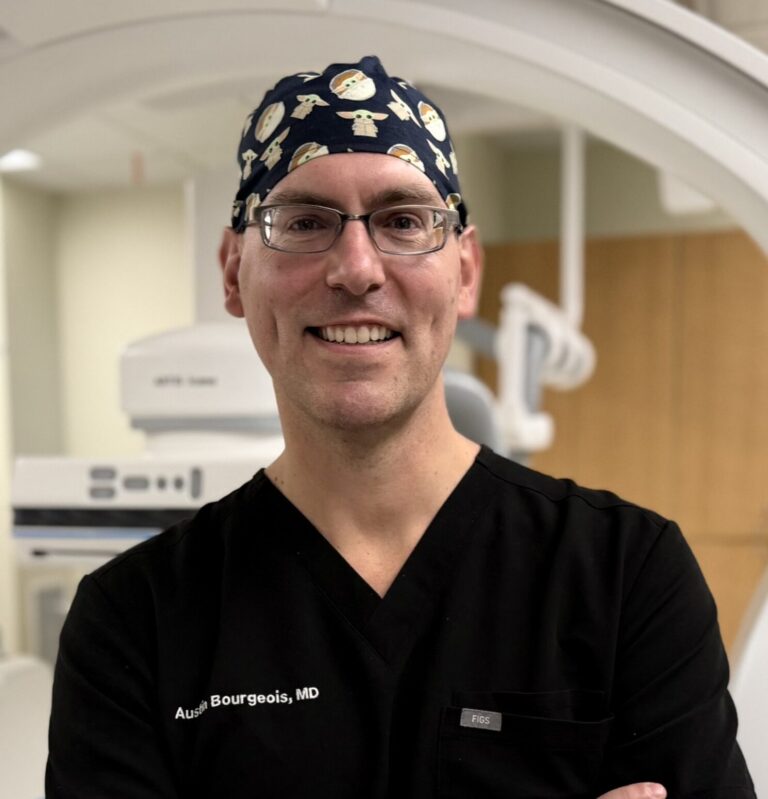
Dr. Austin Bourgeois brings academic-caliber Y90 expertise to Huntsville without the travel. His credentials speak for themselves:
- Board-certified in both Diagnostic Radiology and Interventional Radiology & Diagnostic Radiology
- Fellowship-trained in Vascular and Interventional Radiology at the Medical University of South Carolina — one of the nation’s premier IR training programs — where he trained under pioneers of embolization therapy
- Author of nine or more peer-reviewed publications specifically focused on Y90 radioembolization, including research on optimizing dosimetry, imaging verification, and procedural techniques
- Member of the Journal of Vascular and Interventional Radiology (JVIR) editorial board
- Boston Scientific TheraSphere Advanced User — indicating proctor-level expertise with the Y90 platform
- Active clinical trial investigator in medical device research and interventional oncology
- Practicing in North Alabama since 2016 with deep knowledge of the local healthcare landscape and referral networks
What this means for you: your Y90 treatment is guided by a physician who has not only performed this procedure extensively but has literally published the science on how to optimize outcomes. You receive the same caliber of care available at major academic medical centers — with the convenience of staying close to home, your family, and your support system.
Dr. Bourgeois works closely with your existing oncology team, ensuring seamless coordination between your cancer care providers. Whether you have been referred by your oncologist or are seeking a second opinion on treatment options, we welcome the opportunity to discuss whether Y90 is right for your situation.
Frequently Asked Questions
Quick answers about Y90 radioembolization — how it works, what to expect, and treatment outcomes.
Y90 radioembolization is a minimally invasive procedure that delivers millions of tiny radioactive beads directly into liver tumors through a catheter placed in the hepatic artery. The beads emit targeted radiation that destroys cancer cells while sparing healthy liver tissue. You may also hear it called SIRT (selective internal radiation therapy), TARE (transarterial radioembolization), or simply radioembolization — these are all the same treatment.
Y90 treats several types of liver tumors including hepatocellular carcinoma (the most common primary liver cancer), colorectal cancer that has spread to the liver, intrahepatic cholangiocarcinoma (bile duct cancer), and neuroendocrine tumors with liver metastases. It is also used to shrink tumors in preparation for liver transplant or surgery.
Effectiveness depends on the cancer type and stage. For primary liver cancer (HCC), landmark studies show objective tumor response rates above 88% and three-year survival rates approaching 87% in appropriately selected patients. For patients bridged to liver transplant using Y90, median survival exceeds 12 years. Response rates for other tumor types also compare favorably to alternative liver-directed treatments.
Both are catheter-based liver treatments, but they work differently. TACE delivers chemotherapy plus an embolic agent to block blood flow. Y90 delivers radiation via microspheres. In clinical trials comparing the two, Y90 showed significantly longer time before tumors progressed, higher rates of complete tumor destruction, and the ability to treat patients with portal vein involvement where TACE is often considered too risky. Y90 also typically requires fewer treatment sessions.
Most patients experience little to no pain during the procedure itself, which is performed under moderate sedation. You may feel a warm sensation or mild pressure in the abdomen during microsphere injection. After treatment, some patients develop mild abdominal discomfort that is manageable with prescribed medications. The most common post-procedure experience is fatigue rather than pain.
Most patients resume light daily activities within one to two weeks. Fatigue is the most common side effect, typically peaking in the first week and gradually improving over the following weeks. Some patients feel well enough to return to work within two weeks, while others may need three to four weeks depending on their baseline health and job demands. We provide honest, individualized recovery expectations during your consultation.
Y90 emits beta radiation that travels only 2.5 millimeters in tissue — it does not penetrate the skin in any meaningful way. External radiation levels are comparable to everyday background radiation, and your family members' total exposure is estimated at a tiny fraction of a single dental X-ray. No isolation is required. Simple precautions like good hand hygiene and briefly limiting very close contact with small children and pregnant women for about a week are recommended as an extra measure of caution.
Most patients require one or two treatment sessions. If tumors are present in both lobes of the liver, treatments are typically staged four to six weeks apart — one session per side. This is significantly fewer sessions than chemoembolization, which often requires multiple repeated treatments over time.
Yes. Most major insurance plans cover Y90 when it is medically indicated, including Blue Cross Blue Shield of Alabama, Medicare, TRICARE, UnitedHealthcare, Aetna, and Cigna. Prior authorization is required, and our team manages this process for you. We will provide a clear estimate of any expected out-of-pocket costs before your procedure.
Yes. Y90 is one of the most effective treatments for downstaging liver tumors — shrinking them enough to meet transplant eligibility criteria. It is also used as a bridge therapy to control tumor growth while patients await a donor organ. Published data shows downstaging success rates ranging from 42-80%, and patients who achieve transplant after Y90 have excellent long-term outcomes.
The Y90 microspheres remain permanently in the liver but become completely harmless. They deliver 94% of their radiation within the first 11 days and are entirely inert within about 30 days, decaying into stable, non-radioactive material. The beads are microscopic and cause no long-term issues.
Y90 may not be appropriate for patients with severely compromised liver function (advanced cirrhosis), very high lung shunt fractions that cannot be corrected, active uncontrolled infections, or blood flow patterns that would send microspheres to the stomach or intestines and cannot be corrected with coil embolization. These factors are carefully evaluated during the mapping procedure before any treatment is delivered.
Have more questions? Dr. Bourgeois is happy to discuss your specific situation.
Schedule Your Consultation