
UFE vs. Hysterectomy: A Complete Comparison
Understand your options before making the biggest decision about your fibroids.
Schedule Your UFE Consultation



Medically reviewed by the physicians of Image Guided Intervention — Dr. Austin Bourgeois, Dr. David Kim, Dr. Ivan Morales, and Dr. Dana Tomalty, board-certified interventional radiologists in Huntsville, Alabama. Last reviewed: October 2026
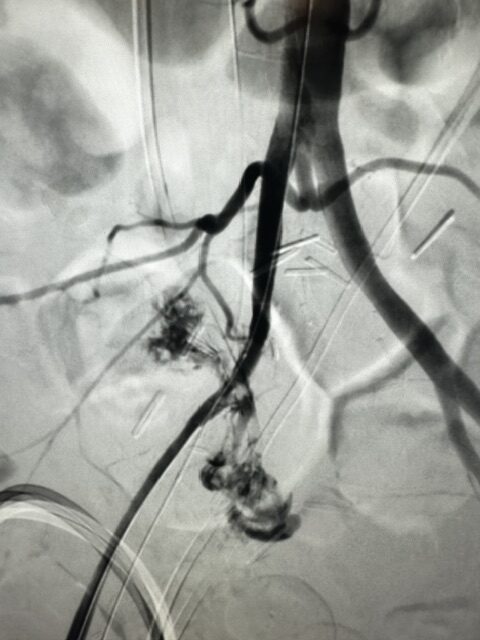
If you have been told you need a hysterectomy for fibroids, you are not alone — and you are right to research your options before making this decision. Seventy-five percent of fibroid removals are still hysterectomies, yet effective uterus-preserving alternatives like UFE have been available for over 25 years. This page provides a transparent, data-driven comparison so you can make the choice that is right for you.
Neither option is universally “better” — the right choice depends on your symptoms, your priorities, your family planning goals, and your comfort level. Our goal is to give you the information to have an informed conversation with your care team.
UFE vs. Hysterectomy: Side-by-Side Comparison
A detailed look at how uterine fibroid embolization compares to surgical hysterectomy.
← Swipe to see both treatments →
| Feature | UFE | Hysterectomy |
|---|---|---|
| Procedure Details | ||
| How it works | Particles block blood supply to fibroids through a 2mm puncture; fibroids shrink over months | Uterus surgically removed through abdominal, vaginal, or laparoscopic approach |
| Anesthesia | Conscious sedation (awake but relaxed) | General anesthesia |
| Incision | 2mm puncture (no stitches) | Abdominal incision or laparoscopic ports |
| Blood loss | Minimal | Moderate (200–400ml average) |
| Recovery | ||
| Hospital stay | Same-day discharge | 2–5 days |
| Recovery to work | 3–5 days (desk), 1–2 weeks (physical) | 4–6 weeks (desk), 6–8 weeks (physical) |
| Time off work | 7–10 days | 4–8 weeks |
| Outcomes | ||
| Symptom resolution | 85–95% | Nearly 100% (uterus removed) |
| Major complications | 1.3–4.8% | 14.5–20% |
| Fibroid recurrence | New growth possible; 20% retreatment at 5yr | 0% (no uterus) |
| Preservation & Hormones | ||
| Uterus preserved | Yes | No |
| Future pregnancy | Yes (23–41% pregnancy rate) | No |
| Hormonal impact | ~3% premature menopause under 45 | Immediate surgical menopause if ovaries removed; changes even if kept |
| Sexual function | Most report improvement | Variable; some report changes |
| Cost | ||
| Estimated cost | $10,000–$15,000 | $5,000–$35,000 (varies by approach) |
Our physicians perform UFE in Huntsville — preserving your uterus with a fraction of the recovery time.
Which Is Right for You?
When UFE Is Typically the Better Choice
UFE may be the better choice when preserving your uterus matters to you — for fertility, personal, cultural, or emotional reasons. It is also typically preferred when you want the shortest possible recovery with minimal time away from work, family, and daily life. Women who cannot tolerate general anesthesia due to medical conditions, who want to avoid the risks of major abdominal surgery (14.5–20 percent complication rate), or who have multiple fibroids that would make myomectomy technically challenging often find UFE to be the best path forward.
UFE is also the right choice when you simply want to explore a less invasive option before considering permanent surgery. UFE does not eliminate hysterectomy as a future option — if UFE does not provide adequate relief, hysterectomy remains fully available.
When Hysterectomy May Be the Better Choice
Hysterectomy may be the better choice when you want absolute, permanent resolution of fibroid symptoms with zero chance of recurrence, when you have completed your family and have no desire for future pregnancy, when fibroids are associated with suspected malignancy (extremely rare but important), or when previous treatments (including UFE) have not provided adequate relief.
Hysterectomy is a well-established, safe procedure when performed by an experienced gynecologic surgeon. It is the definitive solution. The decision to have a hysterectomy should be made with full information about all alternatives — including UFE — not because alternatives were never mentioned.
You Deserve the Full Conversation
Every woman with fibroids deserves to know about all available treatment options before making a decision. If you were told hysterectomy is your only choice without any mention of UFE, you deserve a more complete conversation. If you were told about UFE but want to better understand how it compares to surgery, this page gives you the data to guide that discussion.
Our physicians do not perform hysterectomies — they are interventional radiologists who perform UFE. But they are committed to honest counseling. During your consultation, your physician will tell you whether UFE is a good option for your specific fibroid pattern, and if hysterectomy or myomectomy would serve you better, they will say so and provide a referral.
UFE vs. Hysterectomy FAQs
Quick answers to the most common comparison questions.
Is UFE as effective as hysterectomy?
Hysterectomy resolves fibroid symptoms in nearly 100 percent of women because the uterus is removed. UFE achieves 85 to 95 percent symptom resolution while preserving the uterus, with about 20 percent of women needing retreatment within five years.
Which has the faster recovery, UFE or hysterectomy?
UFE. UFE is a same-day outpatient procedure, and most women return to desk work in 3 to 5 days. Hysterectomy usually involves a 2 to 5 day hospital stay and 4 to 8 weeks off work.
Is UFE safer than hysterectomy?
UFE has a lower major complication rate (1.3 to 4.8 percent) than hysterectomy (14.5 to 20 percent). UFE uses conscious sedation and a 2 mm puncture rather than general anesthesia and surgical incisions.
Can I still get pregnant after UFE or hysterectomy?
Pregnancy is possible after UFE, with published pregnancy rates of 23 to 41 percent. Pregnancy is not possible after hysterectomy. For women actively planning pregnancy, myomectomy is usually recommended first.
Does hysterectomy cause menopause?
Removing the ovaries during hysterectomy causes immediate surgical menopause, and hormonal changes can occur even when the ovaries are kept. After UFE, the risk of premature menopause is about 3 percent for women under 45.
Can I have a hysterectomy later if UFE doesn't work?
Yes. UFE does not eliminate hysterectomy as a future option. If UFE does not provide adequate relief, hysterectomy remains fully available.
When is hysterectomy the better choice?
Hysterectomy may be better when you want permanent resolution with zero chance of recurrence, have completed your family, have fibroids associated with suspected malignancy, or have not found adequate relief from previous treatments including UFE.
Fibroid Embolization Physicians in Huntsville
Uterine fibroid embolization is performed by our board-certified interventional radiologists. Call the clinic and you'll be scheduled with the first available specialist.
Explore Your Options
Talk with one of our interventional radiologists about whether UFE is right for your fibroids — and get an honest referral if another approach would serve you better.
Explore Your Options